Sunday, May 9, 2021

Music of 2020 (That I listened to the most)

2020 sucked (for global events) but was pretty good (for the kind of godless bleep bloop music I like). Here, in no particular order, are the albums I listened to the most during this horrible, no good, very bad year.

Rosa Pano by Luis Pestana

Weird (but good weird) even by Orange Milk standards, Luis Pestana combines glitchy textures and traditional melodies in a collage of organic layers split by hard metallic shards. Presented as a single piece, it flows through sections of noise, drones, melodies, and field recordings, but never feels piecemeal. We’re being led through a kaleidoscopic world where these disparate sounds reflect, bounce off, and complement each other in surprising ways.

Inlet by Hum

23 years is a pretty long gap between albums, but Hum never really broke up, they just went back to their normal lives after a brief fling with a major label. Free from the expectations of commerce, they made an album the way they wanted to: slow and patient. They still sound like Hum, but stretched out over (mostly) epic songs that near 9 minutes long. Besides the infectious “Step Into You”, they are more about vibe that melody, sketching out huge horizons and cavernous voids with their distorted, down-tuned riffs.

Be Up A Hello by Squarepusher

Tom Jenkinson returned to (mostly) straight ahead hardware breakbeat, after years in the wilderness making fusion, solo jazz bass, and DIY software music. This is about as close as you’ll get to the melodic hum and gritty beats of early stuff like Feed Me Weird Things, and for that we are grateful. It’s nice that he’s continually branching out, but, as he’s said in interviews leading up to this, Be Up A Hello has a melancholy undercurrent that perfectly matches this big dumb year.

Scis by Oval

2020 marked the (estimated) 30th year of Markus Popp’s Oval project, but 2010 was a watershed year, going from sampling damaged CDs to making original sounds of his own. O was a pretty abstract release, unfolding at its own pace, unencumbered by traditional son structure. In the decade since, his music has actually gotten more traditional, adhering to a steady beat, using clearly identifiable tones, and achieving something approaching catchiness. That’s not to say he’s lost any of the magic, and in fact Scis is full of aural surprises while maintaining his own glitched out version of four on the floor techno.

Speed Kills by Chubby & the Gang

When hardcore bands decide to do an Oi! throwback, it’s easy for them to come off like scientists in a punk rock lab, carefully trying to emulate the ancient 7”s they worshipped as kids. Instead of treating music with tweezers and microscopes, this London band takes the brute force of modern hardcore and straps on the catchy melodies of the punks of yore, before dissonance became an arms race. This is undeniably catchy and undeniably brutal, even the doo-wop song.

Suddenly by Caribou

Dan Snaith’s early one-man albums really struck a chord with me, but as he added live instruments it kind of turned into more of a straightforward indie rock thing. It was still good, and catchy, but seemed to be missing the slightly unnerving distance on albums like Up in Flames and Start Breaking My Heart. Suddenly finds a great middle ground between the two poles of his music, being catchy yet texturally interesting.

Rakka by Vladislav Delay

I’m a mark for everything this Finnish producer puts out, from his stripped down dub albums on Chain Reaction to today. Recorded while living with his family near the Arctic Circle, it describes the vast empty tundra in a way perfectly suited for his type of abstract techno. Vladislav Delay tracks always manage to make slick beats out of rough samples, and that juxtaposition always hits me just right.

The Common Task by Horse Lords

Hypnotic microtonal Saharan-influenced instrumental rock? Yes! The Common Task was supposed to be Horse Lords big break, but then Covid-19 happened, now they can say “well if it wasn’t for that damn pandemic!” *shakes fist*. There’s more of a loose 70s jazz rock feel to this album, like when Miles Davis drafted rock musicians or Santana did that album with Buddy Miles. The rhythms ebb and flow but never let up, as instruments sketch increasingly intricate lines around each other. Hopefully the next time this Baltimore band resurfaces, there’s not a damn global emergency happening.

Scacco Matto by Lorenzo Senni

Combining punk and electronic music usually ends up as some lame nu metal hybrid, but Lorenzo Senni successfully combines the energy of the former with the timbre of the latter. This new album is a bit less “artsy” than his last couple: instead of abstract repetitive rave buildups that refuse to reach the Drop, these are more song-oriented, with identifiable parts and a clear arc. While still using traditional hardcore aesthetics (there’s a song called “Xbreakingedgex”), this might be his Emo record, with elegiac songs named after Orchid and Mineral albums. Lorenzo Senni has rarely been this serious, but don’t worry, there’s also a song called “Wasting Time Writing Lorenzo Senni Songs”.

Shall We Go On Sinning So That Grace May Increase? by The Soft Pink Truth

Matmos’ Drew Daniel has used his The Soft Pink Truth solo side project for critical reinterpretations of punk and black metal songs, but for this Biblically-named new album he assembled a crew of avant garde luminaries for a meditative collection, far removed from the abrasive albums of past. There’s bits of noise, modern classical, ambient, and R&B flowing in the aether, traveling from hypnotic repetition to collage noise as a single seamless presentation.

Please Advice by Beauty Pill

Chad Clark’s multi-limbed project has always been a conversation with the eternal Present, dropping references to modern people & events in order to give a frame for the bigger questions. Beauty Pill’s music exists in the ecstatic options available with modern recording technology, throwing all manner of instruments & sound processing into the mix, then stripping things away until the core emotions of the songs reveal themselves. Despite being EP length, there’s more than a full album’s worth of ideas across the multiple formats (CD, vinyl, cassette) it comes in.

K.A. Music by The Chinkees

The ska-punk vets are back with a brief but killer EP of organ-driven tunes, with four tracks of all killer no filler. K.A. (Korean American) Music doesn’t just focus on third wave ska punk though, they go back to the first- and second-wave sources, embracing the Caribbean influence much more than their contemporaries. Above all, every song is a catchy, fist-pumping anthem, and we really need those now.

Skeleton Coast by The Lawrence Arms

I’m a Larry Arms lifer, from back when I saw them play in my friend’s living room in high school. There’s been a recent theme of pop punk bands singing about growing older, but this Chicago trio has always mixed their whisky soaked songs with an undercurrent of death’s eventuality. Concept albums are nothing new with the band, and Skeleton Coast links tracks with the sounds of whale calls, while lyrical motifs pop up across the album. I got love for the whole thing, but the standout for me is “Pigeons and Spies”, with its absolutely flooring chorus and seemingly random verses, which were influenced by rapper Immortal Technique.

Hot Wet & Sassy by Tobacco

Black Moth Super Rainbow got messier and messier until the main dude decided to change the name to Tobacco, the better to let listeners know to expect neon splatters instead of pastoral chunes. After a brief return to the sedate BMSR sound, Tobacco makes a 180 with an album that takes his hiss-drenched melodies into even spookier environs. The video of Falcor creeping around the forest is pure nightmare fuel.

Mass Cathexis by Krallice

Since going the full DIY route, Krallice have been pumping out progressive black metal at a quick clip, taking detours to prog epics and brain-melting complexity. This is a pretty brief, straightforward set from the Brooklyn kings of metal, but maybe that’s what we need right now, songs that cut to the bone and don’t mosey along with 100 riffs over ten minutes (which, mind you, they are very good at).

Sign & Plus by Autechre

Just when the world needs them the most, Booth & Brown drop two full lengths to sate the masses. At a combined running time of just over 2 hours, it’s short compared to their epic releases from the last few years, but that makes it all the easier to digest in one sitting. Autechre seem to be looking backwards with these releases, using their recent Max MSP software to grind up, splatter, and re-arrange the softer textures of early albums like Incunabula and Amber. The albums are split thematically, with one covering their ambient side and the other their off-kilter rhythmic side. Taken as one album it would be overwhelming, but split up it’s easier to see how the parts reflect on each other.

True False & The World Will Decide by Negativland

https://negativland.com/negativland-studio-releases

I’m a latecomer to the California satirical cut-up collective, this is as good a place to start with their unique take on cultural criticism. The thing I never knew about then was how often their tracks are built on jokes, like I was expecting shocking audio collages akin to Peter Sotos’ work? Negativland goes down a lot smoother, combining clicking beats and soundbites to show just how fucked we are as a society (a lot). 

Led Zeppelin DVD

 1 disc for the price of 2!


One of the things I’ve done during this global pandemic is finally listening to/watching the endless amount of media I’ve accumulated over the years. Led Zeppelin’s DVD was gifted to me many Christmases ago, but a lack of free time & my wife’s ambivalence to classic rock meant I never got around to watching it til earlier this year.

Besides a widely panned concert film, Led Zeppelin live footage was incredibly hard to come by for decades. Part of it was by design: Their manager Peter Grant considered live recordings detrimental to show attendance, and generally banned it. The other part was a combination of finances and Jimmy Page’s perfectionist tendencies, so the footage sat in vaults until the turn of the century.

But Led Zeppelin did tour a lot in their day, with a schedule that even high profile bands would balk at nowadays. The legend is that they were originally formed so Jimmy Page could fulfill a contractually obligated tour of his old band, The Yardbirds. The weird thing is, I never really understood how Page became responsible that tour. Sure the band signed the contract to tour, but then they broke up. Was the fee for cancelling the venues too much? Music Industry contacts have always been labyrinthine, even more so in the 1960s, but I wonder if Page just felt like this was an opportunity to make some money. His stinginess is legendary, though its important to remember that musicians then (and now) were constantly getting ripped off. It seems like his only indulgences back then were buying a haunted house, and uh… dating a child.

Zeppelin were thrown into the fire from the outset, but with half the band being seasoned session pros, and the other half an uncommonly gifted drummer and a singer with natural stage charisma, they fell together quickly. The old adage goes “Practice Makes Perfect”, and that is even more true of bands, who rely on that sort of unspoken psychic connection to make music sound easy. The quartet ground out a punishing tour schedule for the most of their career, stopping only for injury and death. That kind of nightly performance makes a band really tight, but what happens when these all-too-human musicians are pushed to the breaking point? Led Zep are as good an example as any that time apart is just as important as time together.

Royal Albert Hall, 9 January 1970

Whatever you pay for this 2-disc set, it’s worth it for this barnstorming homecoming set. The band is tight but expansive, fast but grooving, and the sound & film is miraculously pristine, despite some still shot inserts to make up for footage too damaged to repair. Their joy is palpable, and for good reason: The band had something to prove. Despite coming out of the gate with a massive album and garnering legions of adoring fans, critical reactions were pretty negative, especially in their native country. To play the storied Royal Albert Hall to a mass of screaming fans was a big Fuck You to the reviewers who lambasted them as yet another ripoff blues boogie woogie band. Zeppelin had found their people, and proved to the music industry that they could thrive without the support of music magazines.

Danmarks Radio (Gladsaxe Teen Club, Gladsaxe), 17 March 1969

Supershow (Staines Studio, London), 25 March 1969

Tous en ScĂšne (Theatre Olympia, Paris), 19 June 1969

While interesting as a time capsule, these three live TV appearances are strictly for completists: the band is clearly bored, the audience (when there is one) doesn’t seem to know how to react, and all 3 have nearly identical setlists. Each includes “Dazed and Confused”, the band’s centerpiece in the early days. While it was a great way for them to stretch out live, within the artificial confines of a TV studio it comes off as rote, like “ok now its time for Jimmy’s violin bow part, we can take a break”.

Sydney Showground, 27 February 1972 (Splodge edit)

“Immigrant Song” gets a cobbled together music video of live footage spliced together over a soundboard recording. It’s not synced, but its probably as good an example as you will find of that very 60s/70s phenomenon of the daytime concert in a giant stadium before the concept of Stadium Rock was perfected.

The song is the brisk opener for the otherwise pretty sedate III album, notable perhaps for what it doesn’t have: a guitar solo. The live version rectifies this, along with galloping along at an even faster BPM than on disc. I’ve gone back and listened to it several times, as its rare to hear the band play ahead of the beat so much, since they made their name with grooves that were more plodding than swift.

Madison Square Garden, 27–29 July 1973

By 1973, the years on the road were starting to wear on the band. These four songs are from the same concerts that produced the legendarily panned The Song Remains the Same live album and concert film. Objectively, it’s bad. As a record of where the band was at this stage in the game, it’s remarkably accurate. Despite raking in millions and essentially creating the myth of 70s Rock Star Excess, they were annoyed with each other and the road. John Paul Jones wanted to quit, Robert Plant and John Bonham were homesick, and Jimmy Page was beginning his spiral into heroin addiction. Not to mention their iron-fisted manager, intense even in normal situations, was dealing with the (still unsolved) theft of nearly $200,000 in cash from a hotel safe deposit box. The band was near the height of their power, but no one was happy.

What strikes me the most about The Song Remains the Same footage is how small the band is within the cavernous venue. At the time, Madison Square Garden could hold 20,000 concertgoers, yet the band appears to be on a miniscule stage compared to the giant multi-tiered structures that eventually became the norm. Concert technology would eventually catch up, though for a while anyone past the first dozen rows was seeing tiny figures playing the music.

Earls Court, 24–25 May 1975

The band took 1974 off, and by 1975 the world of arena rock resembled what most people remember: a giant, rumbling, well-oiled machine criss-crossing the country. The break had re-energized the band, but with nothing left to prove as the biggest band in the world, their swagger was missing the haywire energy of their early days. They were kings, they knew it, and their five night stand in the UK’s biggest arena went off without a hitch, complete with a custom light show and, in one of the first instances of a now-common practice, a giant screen behind the band showing the action to punters in the nosebleeds.

Zeppelin may have been big, but the rest of the music world was catching up. Big expensive arena shows, pioneered by acts like Pink Floyd and The Who, were becoming an arms race for the loudest, most explosive event. Led Zeppelin didn’t need to struggle to keep up, but the band (especially Page) was concerned at the distance it put them from the audience. They had earlier attempted to rectify this with a small club tour, which proved impossible as thousands of fans mobbed the small venues. It was clear that the band was on a rarefied level, and there was no turning back.

If not for the death of John Bonham, this may have been what Led Zeppelin would have been like: a big stage show, competent performances, but none of the push and pull jamming that typified the bands early days. It’s hard to stretch a song out when you’re dealing with lighting cues, which look cool but leave many bands feeling trapped in the machine they created.

Knebworth, 4 August 1979

How big is too big? By 1979 Led Zeppelin was a wreck: Jimmy Page and John Bonham were knee-deep in their respective addictions, Robert Plant was still mourning the death of his young son, and to call John Paul Jones detached would be an understatement. Additionally, the advent of punk made dinosaur rockers like Led Zeppelin an artistic, if not so much popularly, dead-end.

Despite not having played together in two years, and not on English soil for four, the offer to play the Knebworth festival was too good to pass up. A huge demand for tickets extended the single show to two, and despite a lengthy rehearsal schedule, they only got two brief warmup shows in before hitting the giant field in front of their largest audience ever.

The band, especially Robert Plant, were frank in the assessment of the show. It was a disaster. The band, dressed like extras in Miami Vice, hobble through the hits, visibly shaken and drenched in sweat. Plant tries in vain to connect with the huge crowd, an emaciated Page acts like he’s in a completely different world, Bonham manages to keep it together only through his innate gifts, and Jones disappears into the shadows as often as he can.

The album they were ostensibly there to promote, In Through the Out Door, was just as detached as their performance. Mostly handled by Jones and Plant, it was a keyboard heavy excursion in excess that desperately needed Page’s, or even a strong producer’s, guidance. Unfortunately Page was absent more than not, nearing the apex of his heroin addiction and unreliable as Jones and Plant attempted to assemble the album.

The Rest

The rest of the DVD is a smattering of promo clips and truncated live performances, but honestly after the Knebworth stuff I was done. The success that Led Zeppelin chased, and ultimately succeeded in getting, turned out to be a golden cage they couldn’t escape. The magic of those early performances is evident, but a punishing tour schedule, personal tragedies, and addictions ultimately turned them into a shell of their former selves. They’ve reunited several times, resulting in disasters in the 80s and a competent showing for what became their final show. It wasn’t just that missing a drummer like Bonham disrupted the band’s chemistry, it’s that they were completely different people from when they started in the late 60s, and you can’t really bring that magic back once it’s gone.


90s Soundtracks pt 2: Godmoney

 Christian punk for a movie about drug dealers


Godmoney is not a good movie. I rented it from Blockbuster in the late 90s and all I recall is a vague plot about a drug dealer stealing money. The acting is bad, the pacing is glacial, and beyond the soundtrack there’s really not much to recommend; it looks exactly like a low budget movie from a first-time filmmaker. Director Darren Doane got his start making music videos for Southern California punk bands, which didn’t call for a skill level much higher than “make the band look cool, maybe throw in some hot chicks”. He did a lot of videosA lot. He must have had a lot of favors owed to him, because the cast of Godmoney is mostly filled with band members with little to no acting experience, and it shows. As bad as it is, Doane’s filmography only got worse, becoming Kirk Cameron’s in-house director for his ultra-conservative right-wing film studio, making a troubling number of Michael Madsen-starring direct-to-video features, and filming the occasional documentary defending homophobes. I’m not sure when the switch was flicked between 42K (something about a magical necklace, ninjas, and babes) and Kirk’s Cameron’s Saving Christmas (the official title), but he did not reveal himself to be a secret auteur.

Christian entertainment runs deep in Doane’s work, so it’s not surprising that most of the bands here were signed to Tooth & Nail Records, hell this could act as a decent label primer for those interested. Tooth & Nail stood out from the cornier church lovin scene by having pretty high standards, signing decent bands and not beating Jesus over your head.

It’s worth noting that V2 Records, the label that actually released the soundtrack album, were hot shit for a little while. Founded by Richard Branson in 1996 following the sale of Virgin Records, V2 showed the same willingness to throw money at anything, with the era of $15.99 CDs fueling their singing spree. They made their bones with Moby’s massive albums Play and 18, but constant restructuring in the early 00s meant that by 2007 they were more of a line item on a financial spreadsheet than a functioning label. It still exists in name, but since Moby reclaimed the rights to his V2 albums, it’s indistinguishable from any number of constantly repackaged and resold publishing rights clearinghouses.

Without further ado, Godmoney: The Soundtrack, which despite being 22 tracks long barely cracks an hour runtime.

Pennywise “Peaceful Day”

These Epitaph mainstays always struck me as the jocks of the punk rock scene, spouting a generic PMA vibe but not weird enough to really interest me. I did own Full Circle in high school, and my cousin had Unknown Road, but as they’re kind of the template of generic Epitaph punk rock, they never really stuck with me. Guitarist Fletcher Dragge plays a drug dealer enforcer in Godmoney, but I mostly remember him in old interviews moaning about how the massive success of The Offspring’s Smash overwhelmed the label and he felt ignored.

MxPx “Doing Time”

Magnified Plaid managed to break out of the Christian Punk Rock ghetto by writing great songs and keeping their faith in the background. “Doing Time” is a quick little ode to youthful rebellion that goes down sweet with a catchy melody, but the theme seems to be that you can be a wild kid and wild adult and everything will be fine. Real punk rock shit right here. The band started out on Tooth & Nail but jumped to the majors in the post-Dookie feeding frenzy, and I clearly remember at the time Christian punks at my school saying they were good even if you weren’t a Believer.

Descendents “Lucky”

The SoCal legends were on a roll in 1997, with Milo back in the band and a recent album that managed to both capture the energy of their 90s run, and help them earn some dough that they never saw back then. “Lucky” was a b-side from the Everything Sucks album, but damn near one of the best tracks they’ve ever done. It probably got the boot to give the album a better balance of the serious songs and joke songs, both of which they excel at.

Stavesacre “Tranewreck”

Soundtrack albums have never been known for their good sequencing, but Godmoney is an anomaly in that it structures the tracklist around a few themes. After three tracks of aggressive pop-punk, it switches gears with four songs in the hardcore vein. Later on, the poppier tracks are grouped together, and the longer epics are at home at the end. Stavesacre are another Tooth & Nail band, and at less than 2 minutes this little bit of self-lacerating Christian hardcore doesn’t overstay its welcome, with something about “my carnal mind” heard in the din.

Chance 22 “Hollow”

After some internet sleuthing, it would appear this song is the only recorded evidence of Chance 22. Looking through the liner notes, the most I can find is that one of the members currently works for a guitar manufacturer. Sounds like they threw every popular angry male music genre in a blender, you got some nu metal guitar chugs, some rapping, and some off-key singing. Despite owning this CD for nearly a quarter century, I’ve made it all the way through this song once, to write this essay.

Stanford Prison Experiment “The Accomplice”

I gotta make a stand here: If you name your band Stanford Prison Experiment, you better sound a lot more intense than this grunge sounding track. The only bands allowed to use that name make grindcore and fit 12 songs on a 7”.

Rollins Band “Saying Goodbye Again”

Henry Rollins seems like a decent guy. I like his non fiction writing, his spoken word stuff is OK, and he’s a tireless supporter of new and extreme music, but I do not enjoy the music he makes. I’m not even a big fan of his Black Flag years, not even Damaged (for the record, the best Black Flag vocalist was Dez, the guy who didn’t want to be the singer and quickly moved to guitar). I think a lot of my ambivalence about Rollins Band has to do with how he recruited clearly overqualified musicians to play what amounted to dumbed down stoner rock. Eventually he did replace them with a dumbed down stoner rock band, but nothing he’s sung on has ever resonated with me. Despite that, “Saying Goodbye Again” is a pretty affecting track, one of several he wrote about seeing friend Joe Cole get shot and killed in front of him during a robbery.

Down By Law “Independence Day”

Some songs just unfold perfectly, with every note and word following the other in a way that hints at some divine force. Not God (though most of the bands on this comp might say that), but a force in the universe that connects us all. Dave Smalley’s post-Dag Nasty and All outfit probably had some other songs, but this brief celebration of seeing a band live is good enough to outshine the singer’s exceedingly iffy politics.

Farside “Hope You're Unhappy”

I thought this song was really deep in high school but damn, whiny dudes are the worst. Revelations Records had this side hustle of former hardcore bands going for a janglier alterna-rock thing, and while it was occasionally successful, more often than not it was a forgettable relic from the era.

Dance Hall Crashers “Nuisance”

I have one bit of trivia for Dance Hall Crashers, and it’s that they were formed by Tim Armstrong and Matt Freeman after Operation Ivy broke up. They cycled through a couple band’s worth of members, switched from dancehall to a pop punk/ska/sorta swing sound, and found success with two lead vocalists. They burned bright, but soon petered out around the turn of the century. In their heyday they were inescapable, with their legit roots in the punk scene and the fatc that they seemed to pop up on a lot of soundtracks (this isn’t the first song of theirs I’ll be covering in this series). The song’s fine, I mean you can’t have a 90s pop punk soundtrack without ska, it just wasn’t allowed back then.

Blink 182 “Voyeur”

Few things from Dude Ranch stood the test of time, but as a record of how middle class suburban white boys talked, it’s damn near a perfect time capsule. “Voyeur” is, conceptually, pretty bad, though to his credit Tom DeLonge always makes the creepy characters in his songs the butt of the joke, making his narrator in this song also witness his high school bully taking a shower (then again, he also knows his bully’s shower schedule, so there might be more to it).

AFI “Wake Up Call”

AFI made 3 albums of snotty punk before finding fame as the ur-Mall Goth band, though to ask some fans, they never got any better than songs like “I Wanna Get A Mohawk (But Mom Won't Let Me Get One)”. This song is from their 2nd album Very Proud of Ya, and it’s a pretty good litmus test to see if you’ll like any of their pre-Black Sails in the Sunset stuff.

Slick Shoes “Rusty”

Niche scenes have this weird phenomena where some bands are incredibly popular within them, and completely unknown to the rest of the world. Slick Shoes were another Tooth & Nail band with a massive following in their little sphere, enough to be a steady touring act for years and get their own greatest hits album. They sound like any number of pop punk bands of the era, but if you were looking for some pogoing with your fellowship, I bet they were awesome.

Guttermouth “A Day At The Office”

This is a band that doesn’t care about anything, which in 1997 made you a sort of court jester in the punk scene, with everyone waiting for the next crazy shit you’ll pull. Guttermouth’s singer Mark Adkins was a human Tasmanian Devil, leaving a trail of destruction in his wake (there’s a reason there’s a long list of former band members), but the music is surprisingly tuneful, owing more to country and western than the SoCal punk scene they came from.

Ten Foot Pole “It's Not Me”

Did you know their old singer was professional baseball player Scott Radinsky? I saw him play with his later band Pulley in Detroit with Voodoo Glow Skulls (see below). This has been Trivia Corner.

MxPx “Small Town Minds”

This is actually a medley, starting out with the listed track then moving to “First Class Mail”, which follows on the original album. For a band with strong Christian ties, a line like “She sees these things through dogma's narrow eyes” is surprisingly critical of the church.

Voodoo Glow Skulls “You Don't Have A Clue”

Read this story about the fake split Hickey made using an irate message someone from VGS left on their answering machine, it’s funnier than anything I can think of.

Guttermouth “Cut Off”

One last fun song before the brutal final sequence, enjoy it!

Fireside “Sucking The Dust”

The riff is sick, and the weird lyrics can be chalked up to the fact that the Swedish band didn’t speak English as a first language. This track probably goes along with some harrowing scene in the movie where the main character loses his girlfriend or something, I can’t remember. US fans probably know them from their opening track on seminal emo comp (Don’t Forget To) Breath, which is about as perfect an intro to 90s post-hardcore as you can ask for.

Living Sacrifice “Reject”

Christian Death Metal sounds like an oxymoron, but have you ever seen a crucifix? Clearly the most devout prefer a realistic depiction of Jesus’ torture and death. Living Sacrifice had an early run as a thrash act, but like a lot of metal bands in the late 90s, embraced groove metal (essentially nu metal minus the makeup). Most of their albums are on Tooth & Nail sub-label Solid State: yes, Christian Metal was so popular that Tooth & Nail needed a separate department to handle it.

Strife “Untitled”

It’s funny that the main character is played by Rick Rodney of militant straightedge band Strife, as his character gets mixed up with drug dealers. The band’s letter jacket logo, and the types of people I saw wearing their shirts, led me to believe they were a humourless chugga chugga hardcore band and… I wasn’t wrong. Bands that come across as self-help gurus always rubbed me the wrong way, but I do appreciate the cleaner sound and straightforward songwriting on their later album, Witness a Rebirth. Too many 90s hardcore bands tried to go all Industrial and it was never a good look.

Far “All Go Down”

This song is 8 minutes long, perfect for the end credits. Despite the credit to Far, it’s really a Jonah Matranga track, and a fairly accurate example of the music he’d make for the next few decades. Far had some pretty good songs, but getting wrapped up in the grunge/punk wave in the 90s rarely panned out in the long run. Nowadays “former punk dude goes solo acoustic” is a pretty normal path, but credit’s due to one of the first (but not the First). After Far disbanded, Jonah went the full DIY route, self-releasing a ton of home recordings, touring non-stop, and occasionally joining a full band.

Saturday, May 8, 2021

Oops! The Tour


Sunday, July 14, 2002

Detroit, Michigan

“You gotta see em live” always sounded like a hollow phrase, a way to demand someone appreciate the same music you do. If a song doesn’t move you from shitty car speakers, how could the same thing in person be any different?

I went to college in Bowling Green, Ohio, which is about 30 minutes from Toledo and about an hour from Ann Arbor and Detroit, where you can see the actual Hotel Yorba from 75 as you enter the city. I’d usually catch a ride with my friend JR to shows at the Magic Stick and C-Pop Gallery in the Motor City, but on this July weekend our driver was Jason Zeh, piloting his parent’s minivan.

Skin Graft records organized Oops! in 1994 as a semi-regular festival type event at Chicago’s legendary Lounge Ax venue, whose fertile post-rock, noise, etc scene made such an event popular. After touring sporadically as a multi-media event (with a theater troupe providing between-band skits), the 2002 edition was a cooperation with Load Records, who had grown into a cornerstone of the new skuzzy psychedelic noise coming out of its home state of Rhode Island.

I had been to shows at the (possible defunct) Magic Stick many times in the past, but always in the evening. Oops! The Tour had an early door to accommodate the long lineup, so the sun was not quite set as we rolled up. As we walked up the long flight of stairs to the show room, I saw something that went unnoticed up until then: The Magic Stick had a window. It was up where the wall met the ceiling, but the light pouring in really opened up the dank gray space, still permeated with the smell of years of cigarette smoke despite the recent indoor ban.

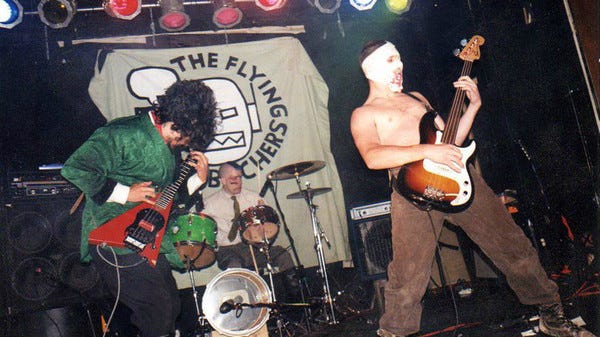
I believe The Flying Luttenbachers were playing when we walked in. The crowd was a little thin since it was early, but the drums/two bass Infection & Decline lineup of the jazz/noise/metal/etc group were playing like they had a gun to their heads. Drummer Weasel Walter was in his Skinhead Mutant phase, with a shaved head save for 2 locks of hair gelled up into devil horns (or maybe it was a mohawk?). One of the bassists was shirtless & wearing what I thought was a hockey mask, though images from the era prove it was fabric wrapped around his face. The other bassist had on this quasi-pirate costume probably cobbled together from thrift stores. The songs all ran into each other without any pauses or stage banter, except at one point the Pirate Bassist needed a second to adjust something and yelled “WAIT!” at his bandmates in the brief silence before the next song.

The Flying Luttenbacher’s 1996 album Revenge had made a Best Of list in an issue of Guitar World, so I was at least a little bit familiar with them. Their most recent album at the time got some decent airplay on my university’s radio station, but it just seemed like noisy jazz to me. In person, it was like shards of glass from three different broken mirrors that somehow fit together perfectly. There was virtuoso skill on display, but in the service of something other than showing off how good they were. To be honest it was a bit more than my brain could handle, but I was intrigued.

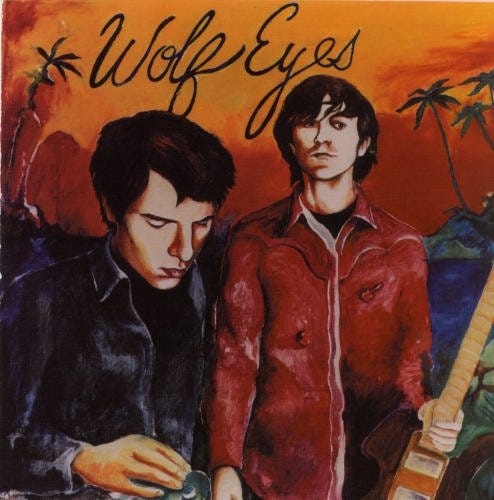
JR had played the self-titled Wolf Eyes CD in the car during trips to Ann Arbor, but my first reaction was What is this shit? It was just static! Was his stereo broken? He assured it me it was quality stuff, but I wasn’t sure. Live, the band was a full on punk rock explosion, with John Olson drenching the front row (including me) with beer during the first song. He had a suitcase full of oscillators open in front of him, Nate Young was moaning in a mic while adjusting a small modular synth setup, and Aaron Dilloway had a whole table of gadgets in front of him, along with a heavily modified guitar, and a contact mic in his mouth. The band lurched back and forth in a seasick sway, conjuring Dread and violence from their primitive setup. This wasn’t the kind of experimental music concert where you sat down and nodded in agreement to academic drones, this was a visceral show, with all the energy of a hardcore band. The frequencies started to re-arrange my DNA, and suddenly Wolf Eyes (and noise music in general) started to Make Sense.

Arab on Radar had a very strict onstage setup: 4 guys in matching Dickie’s outfits, lit by a row of harsh lamps they set up at the foot of the stage, facing back at them. The two guitar/bass/drums/vocals setup was the first quasi-standard Rock Band arrangement of the night, and in their own weird way they were the most straightforward band on the bill. They had a reputation as a No Wave noise band, but the serrated guitars and squirming vocals came off more like a mutant hardcore band than the art school derelicts of 1970s NYC. The drummer counted off each song in a high, squeaking voice, then the guitarists churned out dissonant repetitive riffs while the singer yelped about bodily functions over top.

The sound seemed to push each band member around like they were trapped in a viscous fluid: one jumped in place, another spun around in tight circles, another balanced on the lip of the stage, his guitar thrust out from his crotch in a mockery of Cock Rock moves. Then, and now, I admire it when bands take a typical instrument lineup and do something completely different with them. Arab on Radar did that, and I was equally entranced and confused, especially when the guitar players took a few moments between each song to tune what sounded like out-of-tune guitars.

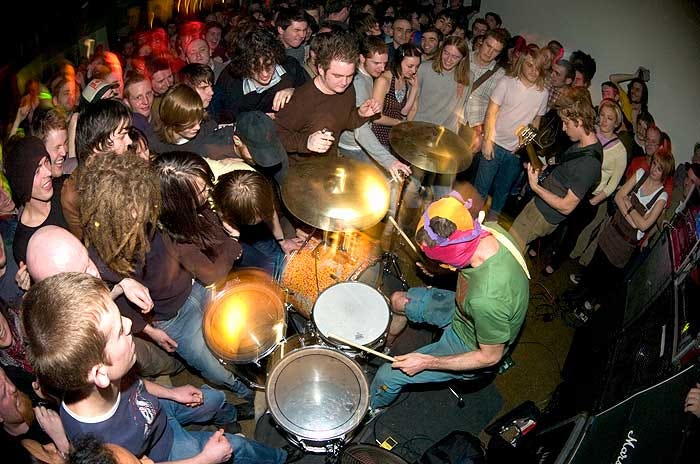
Lightning Bolt used to play on the floor. That was their Thing for a long time, that and playing in front of a wall of amps, and the drummer/singer wearing a mask and pummeling his kit while the audience lurched around him. I was, at the time, completely unaware of this feature of their live show, which is why I was at the front of the stage as they started playing at the other end of the venue.

Diehards knew the routine, so while half of us were stuck back behind the sea of moshers, others were in the splash zone of Brian Chippendale’s drumsticks. When I say it was a sea of people, that is no hyperbole: it was a huge undifferentiated mass of arms and legs, barely holding together as the group lost their balance, regained it, then nearly toppled over again. Their album Ride the Skies was played a lot of college parties I went to, so I knew the music, but it would be another couple years before I saw Lightning Bolt properly. By properly I mean, in a sketchy unmarked warehouse in Detroit, nearly getting decapitated by the cymbal when the crowd pushed forward. Lightning Bolt plays on stages now.

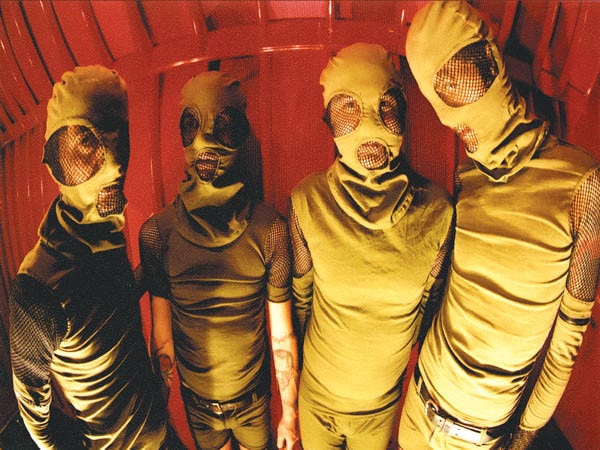
The Locust had a reputation in 2002, of being annoying hipsters, skinny Romulans with coke habits who could distribute Scene Points as they saw fit. After reading Justin Pearson’s book, it’s clear that reputation was projected on the San Diego band and had little basis in reality. The “coke mirror” merch that was so talked about back in those pre-Facebook message board days were really a box of blank promo makeup compacts one of the band members found, which was the perfect size and shape to affix their already-made band stickers. They were an easy target for the insecure to blame for something new infiltrating their hermetically sealed Scene, which is where the reputation became reality: They really hated the hardcore scene, and were willing to go to absurd lengths to try something, anything, to make it interesting. Weird stage clothes, adding a keyboard player, having songs that usually hovered around the 30 second mark, anything. They were trying to destroy music and build it up into something new, much to the chagrin of audiences expecting more chugga-chugga Victory Records hardcore.

This was their Bug Suit era, where each member wore matching nylon costumes with mesh masks. The second Lightning Bolt was done playing, The Locust launched into their first song, and the crowd from the other end of the floor surged forward towards us near the stage. You just had to kind of go with the flow, since any escape was blocked by people, the stage, or the mosh pit that had opened up behind us. Each song blurred into the next, punctuated with some snappy crowd work. Their songs all mostly sounded the same, so a request for “Dog Without A Collar (Run Over Red Rover)” would be quickly answered with “we already played that one” before launching into the next song.

After that show, the noisy, chaotic, and abstract music I didn’t understand suddenly made sense. It was most likely the way it used the same energy in punk rock and hardcore for artier, weirder ends. This was a lineup of bands trying to make music that no one had heard before, to push the limits of what was physically possible, and what people would stand to listen to. The fact that I was in a good venue with likeminded people also helped; the atmosphere was chaotic but fun. After that, a whole new world of music opened up for me, and for that I’m grateful. Maybe you do gotta see em live, maaaaan.

90s Soundtracks pt 1: Tommy Boy


The 90s had some truly bizarre movie soundtrack albums, where the idea of “a collection of songs from the movie” went out the window, and instead a cross section of disparate genres, label synergy, and songs that didn’t even appear in the film were collected into what amounted to expensive mixtapes. In the first of a series, I’m going deep into these weird relics from the CD era, when Brandy rubbed shoulders with Sunny Day Real Estate, and the best Green Day song was buried in the soundtrack to a little-seen (but high quality) teen comedy. 

More movie soundtracks should have dialogue tracks between songs, I mean that’s why the teenage me bought this, the soundtrack to the first (and best) Farley/Spade vehicle, which was a ubiquitous presence on cable tv in the 90s. “Fat Guy in a Little Coat” comes up every winter when I’m getting ready to leave the house, and “malted hops and bong resin” pops into my head with curious regularity. 

The songs on the album range from rap rock to college rock to pop punk, with a soft rock classic and 1973 Eurovision runner-up thrown in for kicks. For a movie that includes a scene where Rob Lowe is electrocuted via urination, there isn’t much filler, and only 1 band that seems to have completely disappeared.

Phunk Junkeez “I Love It Loud (Injected Mix)"

Is this a good song? No. For the movie, when it introduces Tommy at a frat party, is it perfect? Absolutely. Phunk Junkeez predate the mainstream explosion of rap rock, but their obnoxious sound is the perfect soundtrack for white boys to drink to. It’s really a cover of Kiss’s Creatures of the Night song of the same name, a concert staple despite the album failing to bring KISS back to their former glory. What strikes me the most about this song now is how the singer’s vocals are incredibly compressed and pushed forward in the mix, to the point where it’s almost like ASMR. I can almost hear the saliva in his mouth. Distasteful.

"Graduation"

I took 4.5 years to graduate college (due to a semester spent abroad where I earned almost no credits) so this one stings a little.

Paul Westerberg "Silver Naked Ladies"

I wonder if even this song’s author wondered why a trad rock throwback was chosen by the music supervisor, maybe it just worked for the movie’s road trip scenes? The rest of Paul Westerberg’s debut solo album (after All Shook Down, which was a solo album in everything but name) is fairly laid back country-tinged rock, with the exception of single “World Class Fad”, an exercise in keeping The Replacements fanbase happy. The follow-up album, Eventually, is so named because evidently back then taking 3 years between albums was cause for concern.

"Lalaluukee"

If you’ve never done this with your head close to a fan, you’re a liar.

Primal Scream "Call On Me"

There’s a couple distinct eras of Primal Scream: the jangly beginning, the rave-influenced Screamadelica classic, and this, their poorly-received attempt at throwback rock n roll. The album, Give Out But Don’t Give In, is in the pantheon of Hated Brit Rock Follow Ups, along with The Stone Roses Second Coming, lambasted not only for their stylistic change, but for the baffling choice to abandon a successful formula to indulge their love of American rock n roll. The big difference between Mick & Co and Primal Scream is that The Rolling Stones were legitimate scumbags, and Primal Scream seem like fairly well-behaved boys. The band would return to the sample-based sound with Vanishing Point, but the common thread throughout their career is that Bobby Gillespie’s lyrics have always been pretty bad.

"How Do I Look?"

To be honest I cannot remember this quote. Forward!

The Goo Goo Dolls "Wait for the Blackout"

While it was years before I heard The Damned’s original, I still prefer Goo Goo Dolls stripped down cover, full of the buzzing guitars that the original band had nearly abandoned at this point in their embrace of a Goth Rock sound. While The Damned’s studio experiments would eventually bear fruit with 1996s Anything, “Blackout” is choked with unnecessary overdubs, including a particularly annoying acoustic guitar. The Goo Goo Dolls play it like a Buzzcocks song, which reveals it to be an aching ode to love, not the lusty horror vibe Dave Vanian was going for.

"Bong Resin" (This isn’t on YouTube for some bizarre reason)

To be fair, Tommy’s brain cells were just dead. A head full of malted hops and bong resin would probably make him smarter.

Shaw Blades "My Hallucination"

What is this boomer nonsense? Tommy Shaw (Styx) and Jack Blades (Night Ranger) were moonlighting from Damn Yankees long enough to eke out two albums, including this tour through white middle class suburban Classic Rock, like “We Didn’t Start the Fire” without a sliver of self-awareness (Billy Joel’s song is also unaware, but only at his denial of Boomer’s complicity in the century’s atrocities). They threw in the riff to “Sunshine of Your Love” just to make me hate it even more.

Seven Day Diary "Air"

Every major label soundtrack has a couple bands that came and went without much notice, forever recorded for posterity between much more successful acts. Besides some college radio airplay and a lone major-label full-length, Seven Day Diary didn’t make much of an impact, though at the time their revved up melodic alternative rock sound was so common that it was easy for them to fall in the cracks.

"Fat Guy In Little Coat"

I say this every time I put on a coat. Every time. Since 1995. I am nothing if not predicable.

The Carpenters "Superstar"

Delaney and Bonnie’s oft-covered standard is a soundtrack staple, though I’d forgotten just how depressing the verses are, wallowing in despair until that giant chorus opens up. Soft Rock has a pretty dark undercurrent that deserves further investigation, not just because this song ended up serving as an epitaph for Karen Carpenter’s untimely death. Bonus fun fact: Sonic Youth’s version pops up on its fair share of soundtracks too, with the added pleasure of knowing Richard Carpenter singled it out for particular derision.

"Jerk Motel"

I say “Buddy Whack It” probably more often than is healthy.

Soul Coughing "Is Chicago, Is Not Chicago"

Besides the movie’s climax taking place in Chicago, there’s not much reason for this song to appear here. To be honest, Mike Doughty’s treatment of his former bandmates kind of soured me on a lot of his work. Onward!

"My Pretty Little Pet"

This scene starts off as a parody of the famous diner scene in Five Easy Pieces, but transcends mockery by using it as a springboard for Tommy to finally figure out what his skills are as a salesman.

Dexys Midnight Runners "Come On Eileen"

This song isn’t really fair to evaluate, it’d be like criticizing ancient Roman architecture, or saying the Washington Monument’s too tall. In the pantheon of Western Popular Music, “Come On Eileen” is just there. It existed before us and it’ll exist after us, for eternity, regardless of fads or well-intentioned ska-punk covers. What do you expect me to do, make fun of it? I’m sure there’s a few misguided souls out there who hate this song, but they just hate the situation they first heard it, or the person it reminds them of. The song is unimpeachable. Poor, poor Johnny Ray.

R.E.M. "It's the End of the World as We Know It (And I Feel Fine)"

Coming back to “We Didn’t Start the Fire”, Michael Stipe takes us on a different kind of journey through the problems of the late 20th century, hitting the highlights of the Cold War, Iran Contra scandal, and uh... celebrities whose initials are L.B. The McCarthyism reference is actually the 2nd on the album this originally appears on, with “Exhuming McCarthy” also despairing how the political climate in the 1980’s wasn’t much different from the 1950’s. R.E.M. are an institution now, so it’s easy to forget how political they got during their middle years. They started out with environmental songs like “Fall on Me” and “Cuyahoga” on Life’s Rich Pageant, quickly moving onto the more concrete protest songs on Document, culminating with Green’s bitter odes like “Orange Crush”. The band rarely got so boldly political in their songwriting after that, though they used the old longbox design of follow-up Out of Time to incorporate a Rock the Vote postcard asking the buyer’s senator to support a bill that allowed people to register to vote at the DMV, a bill that, as anyone who’s gotten a driver’s license can attest, passed.

Mocedades "Eres TĂș"

The Eurovision Song Contest isn’t a big deal in America, but for the rest of the Western world it’s appointment television, with country’s respect at stake. This 1973 runner-up was a surprise crossover hit in the US, when its dulcet tones fit snugly with the Formica countertops, sunken living rooms, and Naugahyde couches of middle America. In the movie it’s part of the road-trip montage as the guys race the clock to get to Chicago. I think the humor was supposed to be that they both knew the words, but it was a big hit in it’s day, why wouldn’t they?

"Housekeeping"

Yes, this is dumb, but who cares. Richard is a shithead, but he gets his comeuppance in having to see Tommy in his underwear.

Smoking Popes "My Lucky Day"

My first memory of this overlooked pop-punk band was a Guitar World sidebar about how the band was 3 brothers and their friend on drums, and 2 of the brothers were these huge intimidating guys. The 3rd brother, Josh Caterer, helped make the blueprint for the type of ultra-melodic pop punk that got real popular in the early 00s; unfortunately, the Smoking Popes were about 5 years too early. Signed during the earlier punk boom of Green Day & Rancid, the Popes didn’t have their snarl, just the overdriven guitars and fast tempos. Josh Caterer’s vocals reach back to the early days of pop music, as exemplified in their album of show tune covers, The Party’s Over. That album also served as their goodbye to Capitol Records, who rejected the album and released the band from their contract. After hopping around some indies, and Josh Caterer’s departure, the band re-formed and found a much more accommodating home in pop-punk mainstay Asian Man Records.